Binary options, a practical starting guide for beginners
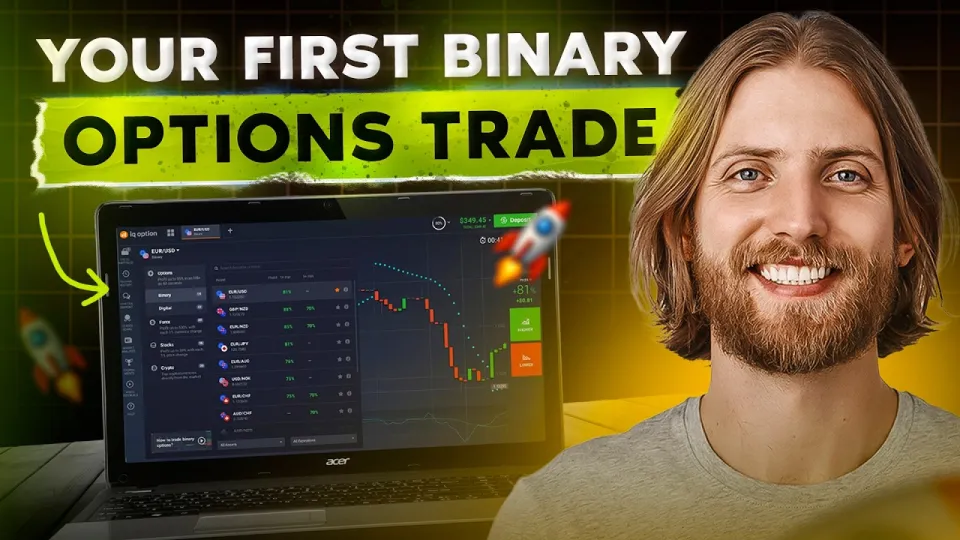
Video: Binary Options | Binary Options Tutorial for Beginners | Where Should You Start?
· based on the channel Binary options tutorial for beginners
Key takeaways
- A binary option is an all-or-nothing contract: you either get a fixed payout (typically 60–90% of the stake) or lose the entire stake.
- Expiry times on modern platforms range from 5 seconds to several hours or days, and the payout percentage depends on the asset and expiry chosen.
- The platforms featured in the video breakdown are Quotex, Pocket Option and Binarium.
- A common beginner rule is to risk no more than 1–2% of the account balance per trade, which means 50–100 losing trades in a row are needed to wipe out a $1,000 account.
- A demo account with virtual funds is the standard way to learn the mechanics before depositing real money.
Binary options are a form of short-term trading where you predict whether the price of an asset will be higher or lower at a fixed moment in time; if you are right you receive a fixed payout, if you are wrong you lose the stake. For a beginner, the sensible start is to open a Quotex account, run the platform in demo mode until the mechanics are familiar, and only then trade small real amounts with strict risk limits.
What a binary option actually is
A binary option is a contract with exactly two outcomes, which is where the name comes from. You choose an asset (currency pair, stock, index, commodity or crypto), an expiry time, and a direction — "up" (call) or "down" (put). When the expiry passes, the platform compares the entry price with the price at that moment. If your direction was correct, the stake is returned plus a fixed percentage profit; if not, the stake is lost in full.
Two numbers define every trade:
- Payout percentage — usually somewhere between 60% and 90% of the stake, depending on the asset and the expiry length. Short expiries and exotic assets typically pay more; major currency pairs on longer expiries pay less.
- Stake size — chosen by you before the trade, and the maximum you can lose.
The break-even win rate follows directly from the payout. At a 70% payout you need to win roughly 59% of trades just to stay flat (0.70 × W = 1 − W). At 80% the threshold is about 56%. This is the single most important fact for a beginner: a strategy that wins slightly more than half of its trades can still lose money.
How to start: a step-by-step beginner path
Starting with binary options is mostly about sequence — learning the mechanics before risking money, and risking small amounts before risking larger ones. A workable order looks like this:
- Pick one regulated-in-your-jurisdiction platform and register. The video breakdown highlights Quotex, Pocket Option and Binarium; all three offer a demo account and a low minimum deposit, typically around $10–$50.
- Learn the interface in demo mode. Find the asset list, the expiry selector, the stake field, the call and put buttons, and the trade history. Place at least 30–50 demo trades so the click path becomes automatic.
- Choose one asset and one expiry. Beginners do better with a single liquid asset — EUR/USD or gold, for example — and a fixed expiry of 1–5 minutes, rather than jumping between instruments.
- Write a one-page plan. It should state the asset, the expiry, the signal you trade, the stake, the daily loss limit and the number of trades per session. If a rule is not written down, it will not be followed.
- Go live with the minimum stake. Keep the same stake size for at least 100 trades; the point of this phase is to collect data, not to make money.
- Review the results weekly. Count wins, losses and the actual net result. If the net result is negative after a fair sample, the signal needs changing, not the stake.
Choosing a platform: Quotex, Pocket Option, Binarium
The platform determines payouts, asset list, minimum stake and how quickly withdrawals are processed, so it deserves more attention than any indicator. The three brokers featured in the video breakdown differ mainly in interface and asset coverage:
- Quotex — a compact web and mobile interface with a strong set of currency pairs and crypto, expiries from short-term to several hours, and a low entry deposit. It is the most commonly recommended starting point for beginners.
- Pocket Option — a broader social and copy-trading layer, a wide asset list and both short and long expiries; popular with traders who want to follow other users' strategies.
- Binarium — a long-running platform with a straightforward layout, a demo mode and a range of account tiers.
Whatever you choose, check three things before depositing: the minimum stake, the payout on the asset you actually intend to trade, and the withdrawal terms (minimum amount, processing time, fees). A platform with 85% payouts and slow withdrawals is worse than one with 78% payouts and same-day processing.
Risk management rules that keep beginners in the game
Risk management, not prediction, is what separates traders who last from those who blow up in a week. Because every binary trade can lose 100% of the stake, position sizing has to be conservative:
- Risk 1–2% of the balance per trade. On a $1,000 account that is $10–$20 per trade, which allows 50–100 consecutive losses before the account is gone.
- Set a daily loss limit of 5–10% of the balance and stop for the day when it is hit. Revenge trading after a losing streak is the most common way accounts die.
- Cap the number of trades per session at 5–10. More trades do not improve the edge; they multiply the cost of a bad one.
- Avoid martingale doubling. Doubling the stake after a loss can recover a single loss, but a run of five or six losses — which happens regularly at a 55% win rate — requires a 32x or 64x stake increase.
- Do not trade during major news releases unless that is explicitly part of the plan; spreads, spikes and requotes make short expiries unpredictable around central bank decisions and payrolls data.
Common beginner questions and doubts
Most hesitation around binary options comes down to a few recurring themes. The first is whether a demo account is worth the time: it is, because it lets you test the click path and the signal without paying for mistakes. The second is the size of the first deposit — a deposit you can afford to lose entirely is the only correct size, and $50–$100 is enough to trade minimum stakes for weeks. The third is the payout question: many newcomers compare platforms purely on the headline percentage, when the real difference usually shows up in withdrawal speed and in whether the payout holds during volatile hours. The fourth is the strategy question: no indicator combination turns a 50% win rate into a profitable system at a 70% payout, so the payout-to-win-rate relationship should be checked before any strategy is trusted.
Platform and tool links from the video
- Quotex registration: https://dakaklik.com/_quotex?creative_id=WzzpYsjS3ps
- Pocket Option registration: https://dakaklik.com/_PocketOption?creative_id=WzzpYsjS3ps
- Binarium registration: https://dakaklik.com/_Binarium?creative_id=WzzpYsjS3ps
- NordVPN (for secure access to trading accounts on public networks): https://dakatop.link/Nord_us?creative_id=WzzpYsjS3ps
Summary
Binary options reward discipline more than prediction: the payout percentage sets a break-even win rate that most beginners underestimate, and the stake size decides how long an account survives a normal losing streak. The practical route is to register on one platform, spend real time in demo mode, fix one asset and one expiry, and risk 1–2% per trade with a hard daily loss limit. The video breakdown on the Binary options tutorial for beginners channel walks through the same starting sequence and links the three platforms used in it. If you are ready to begin, open your Quotex account and start in demo mode before the first real trade.
Source: Binary Options | Binary Options Tutorial for Beginners | Where Should You Start? · Markdown version
Questions & answers
How much money do I need to start trading binary options?
Most platforms allow a first deposit of $10–$50, but the deposit should be money you can afford to lose entirely. With $50–$100 you can trade minimum stakes for several weeks and collect enough trades to judge whether your approach works.
What win rate do I need to be profitable?
It depends on the payout. At a 70% payout you need to win about 59% of trades to break even; at 80% the threshold is roughly 56%. Below those levels a strategy loses money even though it wins more trades than it loses.
Is a demo account useful or a waste of time?
A demo account is the cheapest way to learn the interface, the expiry mechanics and your own signal before real money is involved. Treat 30–50 demo trades as a mandatory step, then move to minimum real stakes rather than jumping straight to large positions.
Why do platforms show different payouts for the same asset?
Payout is set by the broker and varies with the asset, the expiry length and market volatility at the time. Compare the payout on the exact asset and expiry you plan to trade, and also check withdrawal terms, since fast processing often matters more than a few percentage points of payout.